A Comprehensive Guide to Smart Borrowing
In today’s financial landscape, loans play a vital role in achieving various life goals. Whether you’re looking to buy a home, finance a car, pay medical bills, grow a business, or tackle an unexpected expense—loans can get you there without the need to save for years.
That said, figuring out the right loan type can be a bit overwhelming, especially when you encounter terms like secured loans and unsecured loans. Each option has its own set of advantages and disadvantages, interest rates, and qualifying criteria. So, how do you figure out which one suits your situation?
In this guide, we’ll break things down in a straightforward way so you can make the best financial choice for yourself. By the time you finish reading, you’ll know:
- What secured loans are
- What unsecured loans are
- The key differences between the two
- The pros and cons of each option
- When to go for a secured or unsecured loan
- What you need to qualify and what documents to prepare
- How it affects your credit score
- Real-world examples
- Tips for selecting the right loan for your situation
If you want to create AI Ads you can visit: https://adscribe.online
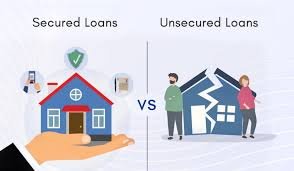
Let’s dive into your borrowing journey!
📌 What is a Secured Loan?
A secured loan is a loan that requires you to put up an asset as collateral. If you can’t pay back the loan, the lender can take that asset. Because of this added security, interest rates for secured loans are typically lower.
Common examples of collateral:
- Property or a house
- Gold or jewelry
- Cars or other vehicles
- Fixed deposits
- Investments and bonds
- Business assets
Popular Types of Secured Loans:
Loan Type
Collateral
Home Loan
Property
Auto/Car Loan
Vehicle purchased
Gold Loan
Gold ornaments
Secured Business Loan
Business assets
Mortgage Loan
House/land
📍 Because lenders have security, they often approve larger loan amounts with longer repayment periods.
📌 What is an Unsecured Loan?
Unsecured loans don’t require collateral. Instead, the lender focuses on factors like:
- Your income
- Credit score
- Repayment history
- Job stability
Since there isn’t an asset backing it up, lenders assume more risk, so unsecured loans usually come with higher interest rates and shorter repayment terms.
Popular Types of Unsecured Loans:
Loan Type
Purpose
Personal Loan
Medical expenses, weddings, etc.
Credit Card Loans
Short-term borrowing via a credit line
Unsecured Business Loan
Business needs without collateral
Education Loan (sometimes)
Tuition and study expenses
📍 These are great for quick cash needs, emergencies, or when you don’t have anything to secure.
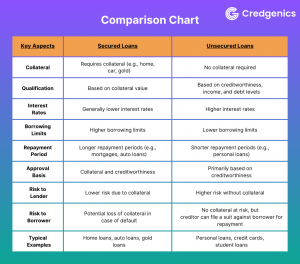
🔍 Secured Vs Unsecured Loans: Key Differences
Feature
Secured Loan
Unsecured Loan
Collateral Required
✔ Yes
❌ No
Interest Rate
Low
High
Loan Amount
Higher
Lower
Approval Time
Longer (valuation needed)
Fast
Risk to Borrower
Asset can be taken if default
Only affects credit score
Eligibility
Flexible
Strict
Repayment Tenure
Longer
Shorter
Feature
Secured Loan
Unsecured Loan
Collateral Required
✔ Yes
❌ No
Interest Rate
Low
High
Loan Amount
Higher
Lower
Approval Time
Longer (valuation needed)
Fast
Risk to Borrower
Asset can be taken if default
Only affects credit score
Eligibility
Flexible
Strict
Repayment Tenure
Longer
Shorter
📝 To put it simply:
- If you can provide collateral, go for a secured loan.
– If you’re looking for quick funds and have a solid credit record, choose an unsecured loan.
🎯 Advantages of Secured Loans
✔ Lower interest rates
✔ Higher loan amounts possible
✔ Longer repayment periods (up to 30 years)
✔ Easier approval even with moderate credit
✔ Great for long-term financial goals
Best for:
- Buying a home
- Financing a car
- Large business expenses
– Consolidating debt at lower rates
⚠️ Disadvantages of Secured Loans
❌ Risk of losing your collateral
❌ Longer processing time due to asset checks
❌ More paperwork involved
❌ Prepayment penalties can apply sometimes
📍 If you can’t keep up with payments, your asset is at risk.
🎯 Advantages of Unsecured Loans
✔ No collateral needed
✔ Fast approval (sometimes within 24 hours)
✔ Minimal paperwork
✔ Flexible usage—no restrictions on how you spend it
✔ Ideal for emergencies
Best for:
- Medical expenses
- Travel and weddings
- Short-term cash needs
– Personal financial crises
⚠️ Disadvantages of Unsecured Loans
❌ Higher interest rates
❌ Lower eligibility for loan amounts
❌ Shorter tenure can increase pressure on monthly payments
❌ Strict credit requirements
❌ Rejections can negatively impact your credit score
💸 Interest Rate Comparison
Loan Type
Average Interest Rate
Tenure
Home Loan (Secured)
8% – 12%
Up to 30 years
Car Loan (Secured)
9% – 14%
3–7 years
Personal Loan (Unsecured)
12% – 28%
1–7 years
Credit Card Loan (Unsecured)
24% – 42%
Up to 3 years
📍 More risk for lenders means higher interest for borrowers.
🧾 Credit Score Requirement
Loan Type
Minimum Credit Score
Secured Loan
600+ (flexible due to collateral)
Unsecured Loan
Usually 700+ required
📍 For unsecured loans, your credit report is crucial for getting approved.
📑 Documentation Requirements
Requirement
Secured Loan
Unsecured Loan
ID Proof
✔
✔
Address Proof
✔
✔
Income Proof
✔
✔
Credit Report
Optional
Mandatory
Collateral Documents
✔ Required
❌ Not Required
🧠 Which Loan Should You Go For?
Deciding between secured and unsecured loans boils down to your financial state, urgency, and how much risk you’re willing to take.
Go with a Secured Loan If:
✔ You own valuable assets
✔ You need a large loan
✔ You prefer lower monthly payments and interest
✔ You’re sure you can pay it back over time
✔ You’re looking to build long-term wealth (like in real estate)
Go with an Unsecured Loan If:
✔ You need cash fast for an emergency
✔ You don’t want to put up assets at risk
✔ You can pay it back quickly
✔ You have a strong credit score
✔ Your loan needs are small
🧩 Real-Life Examples
Let’s look at some examples for clarity:
🧍♂️ Scenario 1 — Buying a house
You need ₹50 Lakhs and can offer a property as collateral.
→ Best choice: Secured Home Loan
🧍♀️ Scenario 2 — Medical emergency
You urgently need ₹2 Lakhs.
→ Best choice: Unsecured Personal Loan
🧑💼 Scenario 3 — Expanding a business
You need a large sum of money and own business property.
→ Best choice: Secured Business Loan
👩🎓 Scenario 4 — College fees
You require a smaller amount quickly.
→ Best choice: Unsecured Education/Personal Loan
📉 Impact on Credit Score
Action
Effect on Credit Score
Timely EMI Payments
Improves score
Missed Payments
Score drops quickly
Loan Default
Hefty impact; legal actions may occur
High Credit Utilization
Raises risk rating
📍 Defaulting on a secured loan means losing the asset and damaging your credit score.
You can also read our other loans related blogs, please visit: https://loans.fundicainvestments.com/whats-a-loan-guide-to-smart-borrowing/
📍 Defaulting on an unsecured loan just hurts your credit and makes borrowing tougher later.
🔐 Risk Factor Comparison
Risk To Borrower
Secured Loan
Unsecured Loan
Losing asset
High
None
High-interest burden
Low
High
Rejection due to credit score
Low
High
📊 Cost of Borrowing: EMI Example
Let’s say you take a ₹5 Lakh loan for 3 years.
Loan Type
Interest Rate
Monthly EMI
Total Paid
Secured Loan
10%
₹16,134
₹5,80,824
Unsecured Loan
18%
₹18,086
₹6,51,096
📍 You’ll end up paying ₹70,000 more just because the loan is unsecured.
🛡️ Safety Tips for Smart Borrowing
✔ Compare multiple lenders before applying
✔ Keep a solid credit score
✔ Borrow only what you can realistically repay
✔ Review all terms before signing
✔ Be aware of processing fees, foreclosure charges, penalties
✔ Avoid applying for too many loans at once
✔ Have a repayment plan in place
📍 Remember: A loan is an obligation, not free money.
⭐ Secured vs Unsecured Loans: Summary Table
Category
Secured
Unsecured
Best for
Long-term goals
Short-term needs
Loan Amount
High
Limited
Interest Rate
Low
High
Collateral
Yes
No
Processing Speed
Slow
Fast
Eligibility
Easier
Tougher
Risk
Asset loss
Credit score loss
🧭 Final Thoughts: Which is Right for You?
There isn’t a universal answer to this. Each loan type serves a different purpose.
- If you’re making a significant purchase, want lower interest, and can provide collateral → Secured Loan is the way to go.
- If you need funds quickly without risking assets, and you can pay it back fast → Unsecured Loan makes more sense.
👉 The most important thing is to borrow thoughtfully, comprehend the terms, and make sure you can manage the EMIs within your budget.
📌 Frequently Asked Questions (FAQs)
1️⃣ Which loan offers lower interest rates?
→ Secured loans typically have lower rates since lenders have collateral to back them.
2️⃣ Can I switch an unsecured loan to a secured loan later?
→ Generally no, unless you go for refinancing or restructuring.
3️⃣ What happens if I don’t repay a secured loan?
→ The lender can take possession of the collateral.
4️⃣ Are personal loans unsecured?
→ Yes, most personal loans are indeed unsecured.
5️⃣ Which loan is better for beginners?
→ If your credit score is low → secured loan is better.
→ If you have a solid income and urgent needs → unsecured loan might be the choice.
✨ Final Thoughts
Loans can be powerful financial tools when handled wisely. Knowing the differences between secured and unsecured loans can help you find the right fit for your needs, repayment capacity, and risk tolerance.
Whether you’re looking to get your dream house or cope with unexpected expenses—making a well-informed choice today can safeguard your financial future tomorrow.
Always keep in mind:
Borrow smart, repay smart, and stay confident in your financial decisions!
Leave a Reply