In the financial world, the word “collateral” is one of the most important terms every borrower must understand. Whether you’re planning to take a home loan, business loan, car loan, or even a secured personal loan, collateral plays a key role in loan approval, loan amount, and interest rates.
Many people hear terms like secured loan, asset-based lending, or loan against property, but don’t fully understand what collateral actually means — and when lenders demand it.
This ultimate guide explains everything you need to know about collateral in a clear and human-friendly manner:
✔ What is Collateral?
✔ Why Do Lenders Need Collateral?
✔ What Qualifies as Collateral?
✔ When Do You Need Collateral for a Loan?
✔ Types of Loans That Require Collateral
✔ How Collateral Affects Loan Approval and Interest
✔ Risk Factors You Must Know
✔ Advantages & Disadvantages of Secured Loans
✔ What Happens if You Fail to Repay?
✔ Expert Tips to Choose the Right Collateral
✔ FAQs Borrowers Commonly Ask
By the end, you’ll be confident about how collateral works — and how to use it wisely while borrowing.
🏦 What Is Collateral?
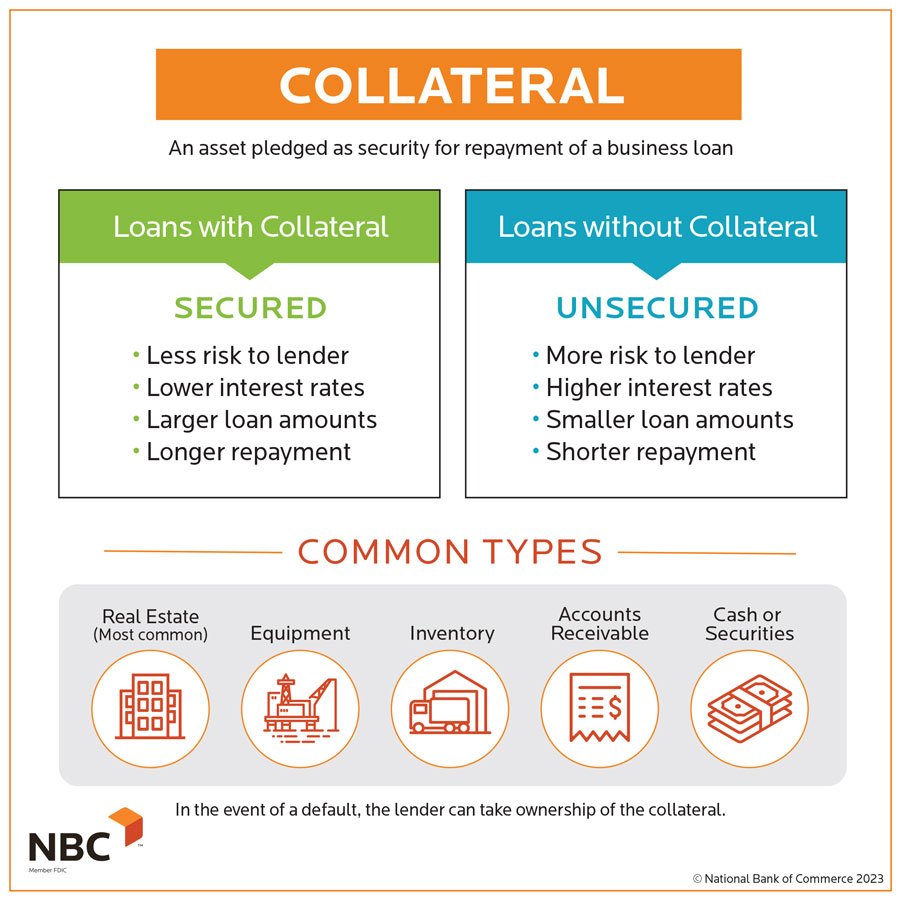
Collateral is a valuable asset that a borrower pledges to the lender as security for the loans.
If you are unable to repay the loan:
👉 The lender has the legal right to seize or sell the collateral to recover the loan amount.
Simple Example
You take a car loan, and the car itself becomes the collateral.
If you stop paying EMIs…
→ The bank can take the car back.
So, collateral protects lenders from financial loss, reducing their risk.
💡 Why Do Lenders Require Collateral?
Lenders always face risk when they give money. If a borrower stops paying, the lender must find a way to recover the funds.
Collateral provides assurance:
| Benefit for Lender | Benefit for Borrower |
|---|---|
| Reduced borrowing risk | Lower interest rates |
| Security in case of default | Higher loan approval chances |
| Faster loan recovery | Ability to borrow larger amounts |
| Encourages disciplined repayment | Longer repayment periods |
Collateral builds trust between borrowers and lenders — which is why secured loans are more borrower-friendly in terms of cost.
If you want to create AI Ads you can visit: https://adscribe.online

🏘 What Can Be Used as Collateral?
Almost all valuable financial and tangible assets can work as collateral. Here’s a complete list:
🔹 Property-Based Collateral
- Residential property
- Commercial property
- Land or plot
- Mortgaged house or building
🔹 Vehicle-Based Collateral
- Cars
- Motorcycles
- Trucks or commercial vehicles
- Boats or other transport vehicles
🔹 Financial Assets
- Fixed Deposits (FDs)
- Bonds
- Mutual funds (in some cases)
- Stock portfolio (pledged)
- Gold or Gold ornaments
- Insurance policies (with maturity value)
🔹 Business Assets
- Machinery & equipment
- Office inventory
- Accounts receivable (pending invoices)
- Warehouse stock
🔹 Other Valuable Assets
- Precious gems, jewelry
- Artwork, antiques (limited acceptance)
Key Point:
Collateral must be easy to value and easy to sell in case of default.
🧾 How Is Collateral Value Determined?
Lenders calculate Loan to Value (LTV) ratio:
LTV Ratio = (Loan Amount / Asset Value) × 100
Example:
- House value → ₹50,00,000 ($50,000)
- Bank LTV → 80%
- Max Loan → ₹40,00,000 ($40,000)
Banks never give full value as a loan because market prices may fluctuate.
🧍♂️ When Do You Need Collateral for a Loan?
Collateral is required when:
✔ You are borrowing a high loan amount
✔ You have a low credit score
✔ You have unstable income or no proof
✔ You are requesting a longer tenure
✔ You apply for a business or home loan
✔ The lender wants to reduce repayment risk
🏛 Types of Secured Loans That Require Collateral
| Loan Type | Collateral Used | Purpose |
|---|---|---|
| Home Loan | Property | Buying a house |
| Car Loan | Vehicle | Purchasing vehicle |
| Gold Loan | Gold items | Quick cash needs |
| Loan Against Property (LAP) | House/Land | Business expansion, education etc |
| Business Secured Loan | Equipment, property | Business funding |
| Education Loan | Property/FD | Higher education abroad |
| Secured Personal Loan | Financial assets | Debt consolidation, emergency use |
Fun fact:
Secured loans often have interest rates 30–60% lower than unsecured loans.
🆚 Secured Loan vs Unsecured Loan — Main Differences
| Feature | Secured Loan | Unsecured Loan |
|---|---|---|
| Requires Collateral | Yes | No |
| Loan Amount | Higher | Lower |
| Interest Rate | Low | High |
| Approval Time | Moderate | Fast |
| Risk for Borrower | Can lose asset | No asset loss |
| Loan Eligibility | Easier | Based on credit score |
| Example Loans | Home loan, car loan | Personal loan, credit card |
💸 How Collateral Affects Loan Approval & Interest Rate
Collateral influences:
| Factor | Impact of Strong Collateral |
|---|---|
| Approval Chances | Very high |
| Loan Amount | Higher amount approved |
| Interest Rate | Lower rate |
| Tenure | Longer repayment time |
| Negotiation Power | You can bargain for better terms |
Banks love low-risk, high-value assets — they reward borrowers accordingly.
⚠️ Risks of Using Collateral
Borrowing with collateral is safe only if you repay responsibly.
Key Risks:
- Losing your valuable asset
- Damage to property may reduce value
- Legal complications if loan terms are violated
- Higher penalty if collateral value drops
Pro tip:
Borrow only what you can comfortably repay.
🟢 Advantages of Collateral-Based Loans
| Benefit | Explanation |
|---|---|
| Low Interest Rates | Saves big on EMI payments |
| Higher Loan Amount | Suitable for large expenses |
| Better Approval Rate | Even with low credit |
| Flexible Repayment Terms | Longer EMIs reduce financial burden |
| Good for Business Growth | Helps start or expand operations |
🔴 Disadvantages of Collateral Loans
| Drawback | Concern |
|---|---|
| Asset Seizure Risk | If EMIs are missed |
| Valuation Challenges | Asset must be easily valued |
| Longer Processing Time | Legal checks & documentation |
| Limited Borrower Freedom | Asset cannot be sold/used freely |
Still, millions choose secured loans because cost savings are huge.
📌 Collateral Documentation Needed
A lender may require:
✔ ID Proof
✔ Asset ownership documents
✔ Proof of income
✔ Bank statements
✔ Asset valuation reports
✔ Insurance documents (for vehicles/property)
Any dispute or unclear ownership may cause loan rejection.
🤔 What Happens If You Cannot Repay the Loan?
If you default:
Step 1: Lender sends reminders & penalties
Step 2: Legal notices and restructuring options
Step 3: Collateral seizure and auction
Step 4: Remaining unpaid amount still collectible
You don’t become free just because the asset is taken — lenders can still pursue dues.
🧠 Smart Tips Before Using Collateral
- Evaluate your repayment ability
- Compare interest + processing fees
- Keep 3–6 months EMI backup
- Choose assets whose value doesn’t drop
- Avoid pledging your only home for risky investments
- Read the loan agreement carefully
- Take loan insurance if the bank offers
Never risk something emotionally valuable like ancestral property unless absolutely necessary.
You can also read our other loan related blogs, please visit: https://loans.fundicainvestments.com/interest-rate-on-loans-are-calculated/
🔍 Real-Life Examples
| Scenario | Should You Use Collateral? | Reason |
|---|---|---|
| Expanding a successful business | Yes | Growth opportunity |
| Starting a risky new business | No | High failure risk |
| Paying medical bills | Yes (if emergency) | Quick relief |
| Buying luxury items | No | Waste of asset risk |
| Studying abroad | Depends | Consider ROI of career |
Use collateral only when the financial outcome outweighs the risk.
🌍 Collateral Requirements in Different Loan Industries
| Industry | Common Collateral Used |
|---|---|
| Banking | Property, deposits, vehicles |
| Microfinance | Land records, jewelry |
| Agriculture | Land, farm machinery |
| Education finance | Property, financial guarantees |
| Corporate loans | Business assets |
Most economies run on secured borrowing, especially in real estate and business expansion.
🧩 Frequently Asked Questions (FAQs)
❓ 1. Can I get a loan without collateral?
Yes, through unsecured loans, but interest will be higher.
❓ 2. Can I use someone else’s property as collateral?
Yes, but written consent and co-signing are required.
❓ 3. Can my collateral value change over time?
Yes. Property or vehicles may appreciate or depreciate, affecting loan terms.
❓ 4. Do I get my collateral back?
Yes — after full repayment, the lender removes the lien.
❓ 5. Which collateral is safest to pledge?
Assets with stable value: property, gold, fixed deposits.
🔑 Final Takeaway
Collateral helps people achieve goals that would otherwise be financially impossible — buying a home, starting a business, pursuing higher education, etc. Secured loans are often more affordable, more flexible, and easier to qualify for.
But…
📌 You must borrow responsibly because your asset is on the line.
✨ Conclusion
Collateral is a powerful financial tool that can:
✔ Boost your loan approval chances
✔ Help you secure lower interest rates
✔ Allow you to borrow higher amounts
✔ Support business growth and personal goals
However, keep in mind:
A secured loan is beneficial only when you can comfortably repay.
Smart borrowers always:
➡ Compare lenders
➡ Analyze repayment capability
➡ Protect their most important assets
Make decisions based on long-term financial stability, not short-term needs.
Leave a Reply