Introduction: The Big Decision Most Car Buyers Face
Buying a car used to be simple — save, buy, own. But today, with so many financial options available, buying a car isn’t as straightforward anymore. Two financing paths often stand in front of modern buyers:
- Car Loan — You borrow money to own the car.
- Car Lease — You pay to use the car for a fixed period (like rent).
Both options have their advantages, but the pressing question for most people is this:
Which option actually saves money — a car loan or a car lease?
This guide will help you answer that question clearly.
Whether you’re buying your first car, upgrading your ride, or deciding between long-term ownership vs short-term use, this article breaks down:
✅ What exactly a car loan and car lease are
✅ How each one works
✅ The true cost of each over time
✅ Pros and cons of both
✅ Real money examples
✅ Mistakes to avoid
✅ When one clearly beats the other
By the end, you’ll understand not just the numbers, but how each choice impacts your lifestyle, savings, and peace of mind.
Chapter 1: What Is a Car Loan? (Plain and Simple)
A car loan is a type of loan where a bank, NBFC, credit union, or online lender gives you money to buy a car. You repay that money in monthly EMIs (Equated Monthly Installments), usually with interest.
How a Car Loan Works
- You choose a car and decide how much you want to borrow
- You apply for a loan from a lender
- The lender evaluates your income, credit score, debt obligations, etc.
- If approved, the loan amount is disbursed
- You pay back the loan in EMIs over an agreed period
- Once fully paid, the car legitimately belongs to you
In a nutshell:
Buy now, pay later — and the car is yours.
If you want to create AI Ads you can visit: https://adscribe.online
Chapter 2: What Is a Car Lease? (Breaking It Down)
A car lease is more like a long-term rental arrangement.
Instead of owning the car, you pay a monthly fee to use it for a specific period (usually 2–5 years). After the lease ends, you return the car or sometimes have the option to buy it.
In leasing:
- You don’t own the car (unless the lease has a purchase option)
- You pay for using the car, not owning it
- The value or depreciation risk stays with the leasing company
In short:
Lease = rent a car for a period, then return it.
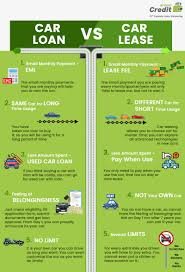
Chapter 3: Car Loan vs Car Lease — Key Differences at a Glance
To build a foundation, let’s start with a quick comparison:
| Feature | Car Loan | Car Lease |
|---|---|---|
| Ownership | You own the car | You don’t own the car |
| Upfront Cost | Moderate (down payment) | Minimal (may be low or zero) |
| Monthly Payment | Based on loan + interest | Based on depreciation value + fees |
| Maintenance Responsibility | Owner (you) | Depends on lease terms |
| No. of Years | Typically 3–7 | Typically 2–5 |
| Mileage Restrictions | No | Often Yes |
| Customization | Full | Usually Not |
| Resale Value | You get it | Not applicable (you return) |
| Tax Benefits | Yes (in some cases) | Yes (for business leases) |
Chapter 4: How Car Loan Payments Are Calculated (EMI Theory)
A car loan EMI depends on:
✔ Loan amount
✔ Interest rate
✔ Loan tenure
✔ Down payment
EMI Formula Explained
While lenders use a standard formula, the simple logic is:
- Higher loan amount → higher EMI
- Higher interest rate → higher EMI
- Longer tenure → lower monthly EMI, but higher overall interest
Here’s a quick example:
Car price: ₹10 lakh
Down payment: ₹2 lakh
Loan amount: ₹8 lakh
Interest rate: 10% p.a.
Tenure: 5 years
Your EMI might be roughly ₹17,000–₹18,000 per month.
The total cost of the car loan = Sum of all EMIs + down payment
Chapter 5: How Car Lease Payments Are Calculated
Lease payments are based on:
- Capitalized cost (Car value)
- Residual value (Estimated value at lease end)
- Depreciation amount
- Lease interest (sometimes called money factor)
- Lease term (duration)
In a lease:
- You pay for the depreciation of the car during the lease term
- Not the full value of the car
This often makes monthly lease payments lower than loan EMIs for the same car.
For example:
Car price: ₹10 lakh
Lease term: 3 years
Residual value after 3 years: ₹6 lakh
Depreciation cost: ₹4 lakh + interest
Your monthly payment might be based on ₹4 lakh spread over lease months — often lower than a loan EMI.
Chapter 6: Detailed Pros & Cons of Car Loans
Pros of a Car Loan
✔ You Own the Car
Once the loan is repaid, the car is 100% yours.
✔ No Mileage Restrictions
Drive as much as you want without penalties.
✔ Customize Freely
You can modify or accessorize your car.
✔ Helps Build Equity
You can sell the car later to recover some value.
✔ Potential Tax Benefits
In some countries, if used for business, interest payments may be deductible.
Cons of a Car Loan
✘ Higher Monthly Payments
EMIs are usually higher than lease payments for the same car.
✘ Long-Term Financial Burden
You are responsible for the loan even if you sell the car.
✘ Maintenance Responsibility
You have to maintain and repair the car at your cost.
✘ Depreciation Risk
Cars lose value fast — especially new ones.
Chapter 7: Detailed Pros & Cons of Car Lease
Pros of Car Lease
✔ Lower Monthly Payments
You only pay for depreciation + fees — not the full car value.
✔ Regularly Upgrade to New Cars
When lease term ends, you can choose another new car.
✔ Less Maintenance Hassle
Many leases include free maintenance or warranty coverage.
✔ Predictable Costs
No surprises, as long as you stick to agreed rules.
Cons of Car Lease
✘ You Don’t Own the Car
At the end of lease, you must return it unless there’s a buy-out option.
✘ Mileage Limits
Leases often have annual mileage caps — exceeding them costs extra.
✘ Customization Limits
No modifications allowed without penalties.
✘ Long-Term Cost Can Be Higher
If you lease repeatedly for decades, total cost can exceed ownership.
Chapter 8: Real-Life Cost Comparison — Loan vs Lease
To answer “Which saves money?” we must look at real numbers.
Let’s compare a 5-year example:
Scenario A: Car Loan
- Car price: ₹10 lakh
- Down payment: ₹2 lakh
- Loan amount: ₹8 lakh
- Interest rate: 10% p.a.
- Tenure: 5 years
Monthly EMI: ~₹17,000
Total Payments: ~₹10.2 lakh
Residual car value after 5 years: ~₹4–5 lakh (you can sell)
Scenario B: Car Lease
- Car price: ₹10 lakh
- Lease term: 5 years
- Residual value after 5 years: ₹5 lakh
Monthly lease payment: ~₹12,000–₹13,000
Total Lease Payments: ~₹7.2–₹7.8 lakh
No resale value (unless you buy at end)
Which Saves Money on Paper?
At first glance, leasing seems cheaper:
- Loan cost: ~₹10.2 lakh
- Lease cost: ~₹7.6 lakh
But this ignores the resale value of the car you own in the loan scenario.
If you sell the car after 5 years for ~₹4 lakh:
Net cost of car loan option:
₹10.2 lakh − ₹4 lakh = ₹6.2 lakh
Now the numbers look closer:
| Option | Total Cost (5 years) |
|---|---|
| Car Loan | ~₹6.2 lakh (net) |
| Car Lease | ~₹7.6 lakh |
In this scenario, the car loan actually saves money long-term — especially if the resale value remains strong.
Chapter 9: Hidden Costs You Need to Consider
Hidden Costs of Car Loans
- Processing fee
- Loan foreclosure charges
- Higher interest if credit score is low
- Insurance cost
- Maintenance cost (fully yours)
Hidden Costs of Car Leases
- Mileage penalties
- Wear-and-tear charges
- Early termination fees
- Lease documentation & service charges
Looking only at monthly payments without considering these can mislead you.
Chapter 10: 2025 Market Context — Rates, Trends & Economic Reality
Understanding the 2025 context helps you decide wisely.
Interest Rates in 2025
Post-pandemic economies have seen:
- Interest rate volatility
- Inflation pressures
- Central bank adjustments
If interest rates remain high, lease payments may stay lower relative to loan EMIs.
If rates fall, loan EMIs (especially floating-rate loans) become more affordable.
Car Depreciation Trends
Cars depreciate fast:
- New car loses 20–30% value in the first year
- 50%+ within 5 years
This depreciation helps lease cost calculations but suggests ownership can be cheaper if resale value remains reasonable.
Electric Vehicle (EV) Trends
EVs are changing the game:
- Lease options are more flexible for EVs
- Technology evolves fast — leasing lets you upgrade frequently
- Battery depreciation and warranty life are considerations
All these factors influence the loan vs lease decision in 2025.
Chapter 11: Tax Implications — Loan vs Lease
Car Loan
In some cases (especially business use), you may be eligible for:
✔ Depreciation deduction
✔ Interest deduction
✔ Business expense claims
This reduces net cost.
Car Lease
Leases also have tax benefits:
✔ Lease payments often fully deductible as business expense
✔ No depreciation worries
Tax laws vary by country and purpose — always consult an accountant for personalised advice.
Chapter 12: Loan vs Lease — Which Is Better by Use Case?
Case 1: You Commute Daily 50–100 km
✔ Loan — better if you high mileage (no penalties)
✔ Lease — can be costly if mileage caps are low
Winner: Loan
Case 2: You Want the Latest Car Every Few Years
✔ Loan — resale hassles
✔ Lease — easy upgrades
Winner: Lease
Case 3: You Want Low Monthly Outflow
✔ Loan vs lease — lease usually lower
Winner: Lease (initial monthly cost)
Case 4: You Plan to Keep the Car Long-Term
✔ Ownership makes more sense
✔ Lease becomes repetitive cost
Winner: Loan
Case 5: You Use the Car for Business
Both have tax benefits — depending on local tax laws.
Winner: Depends on tax rules and your income structure
Chapter 13: Emotional & Psychological Factors That Matter
Sometimes people choose emotionally:
- “I want to own my car”
- “I love customizing my ride”
- “I don’t like restrictions”
- “I want a predictable monthly cost”
Your personality, risk tolerance, and lifestyle matter as much as the numbers.
Ownership brings pride, but leasing brings convenience.
Chapter 14: Should You Refinance Instead of Lease?
Refinancing means replacing your loan with a better one.
When does refinancing save money?
✔ Interest rates drop
✔ Your credit score improves
✔ Better loan terms become available
Refinancing can significantly lower your EMI and total cost — sometimes better than a lease.
Chapter 15: Mistakes to Avoid in Loan vs Lease Decisions
❌ Choosing only based on monthly payment
Never ignore total cost.
❌ Ignoring hidden fees
Extra charges add up quickly.
❌ Ignoring resale value
Ownership offers a rebound in cost.
❌ Not reading lease fine print
Mileage caps and termination fees hurt.
❌ Not comparing deals
Always shop around for the best loan or lease offer.
Chapter 16: Step-By-Step Decision Guide (Practical for 2025)
Here’s a simple checklist:
Step 1: Determine Your Purpose
- Daily commute
- Long road trips
- Business use
- Family car
Step 2: Decide Your Budget
- Monthly limit
- Down payment ability
- Long-term saving plan
Step 3: Compare Car Loan Offers
- Interest rate
- Loan tenure
- Processing fees
- Total cost
Step 4: Compare Lease Offers
- Mileage limits
- Lease duration
- Down payment
- Penalties
Step 5: Calculate 5-Year Cost Scenarios
Include:
- Loan EMIs + maintenance + resale
- Lease payments + penalties
Step 6: Consider Tax Implications
Get help from a tax advisor.
Step 7: Choose Based on Total Cost + Emotional Fit
Chapter 17: Frequently Asked Questions (FAQ)
1. Is leasing always cheaper than buying?
Not always. Monthly payments are often lower, but total cost over long term can be higher.
2. Can I end a lease early?
Yes, but early termination charges usually apply.
3. Can I sell a car I bought with a loan?
Yes — but the loan must be fully repaid first.
4. Which is better for short-term needs?
Lease is usually cheaper for short terms (2–3 years).
5. Which is better for high mileage usage?
Car loan (ownership) has no mileage restriction.
Chapter 18: Case Study — Real Money Comparison
To make this more practical, here’s a real comparison:
Scenario
Car price: ₹15 lakh
Loan rate: 9%
Lease term: 3 years
Residual value after 3 years: ₹8 lakh
Loan Option
Down payment: ₹3 lakh
Loan: ₹12 lakh
EMI (5 yrs): ~₹24,600
Total outflow (5 yrs): ~₹14.8 lakh
Resale value after 5 yrs: ₹6.5 lakh
Net cost: ~₹8.3 lakh
Lease Option
Monthly lease: ₹21,000
Lease total cost (3 yrs): ~₹7.6 lakh
No resale value
In this example:
- Loan may cost more monthly but ends up cheaper after resale value
- Lease is cheaper upfront but has no asset value
Chapter 19: Real Borrower Experiences (Quotes)
Priya, 34, Engineer
“I leased my car because I wanted upgrades every 3 years. It was cheaper monthly and I avoided resale hassles.”
Amit, 40, Business Owner
“I chose a loan because I drive long distances and I wanted to own my car. After 7 years, it’s a valuable asset.”
Conclusion: So, Which One Actually Saves Money in 2025?
If you’re asking, “Car loan vs car lease — which one saves money?”, here’s the practical answer:
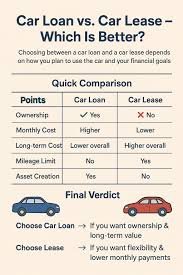
✔ For Long-Term Savings & Ownership
Car Loan usually saves more money because you gain resale value and equity.
✔ For Lower Monthly Payments & Upgrade Flexibility
Car Lease can be smarter if you value flexibility and predictable cash flow.
✔ For High Mileage Users
Car Loan wins — no penalties.
✔ For Short-Term Users or Businesses
Leasing can be cost-effective if tax benefits apply.
Final Words: Your Choice Is Personal, But Your Calculation Must Be Rational
Choosing between a car loan and a car lease shouldn’t be emotional — it should be financial and personal.
Ask yourself:
- How long will I keep the car?
- How much do I drive?
- What is my monthly budget?
- Do I want upgrades every few years?
- Can I handle maintenance costs?
Answering these questions, along with the cost comparisons in this guide, will help you make the best decision for your money and your life in 2025.
Leave a Reply